Specialised civil engineering above the clouds
September 30, 2025 | Moritz Glück
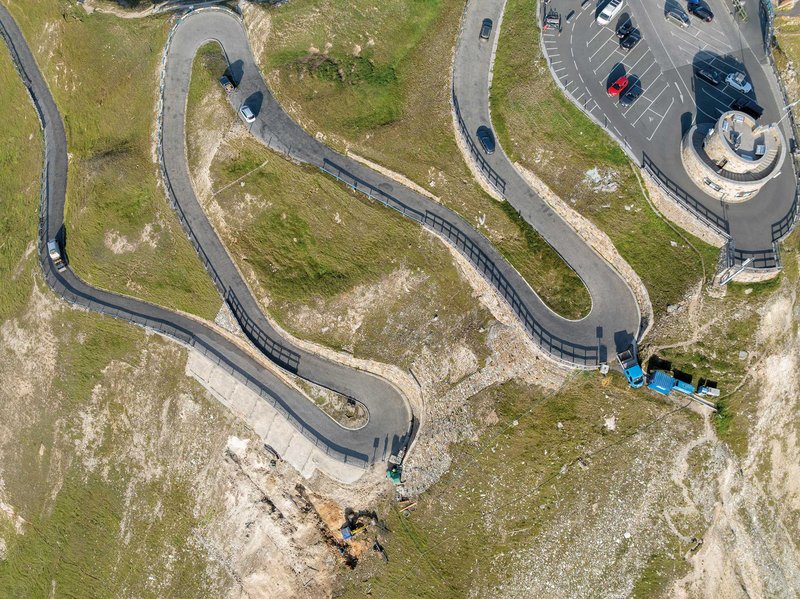
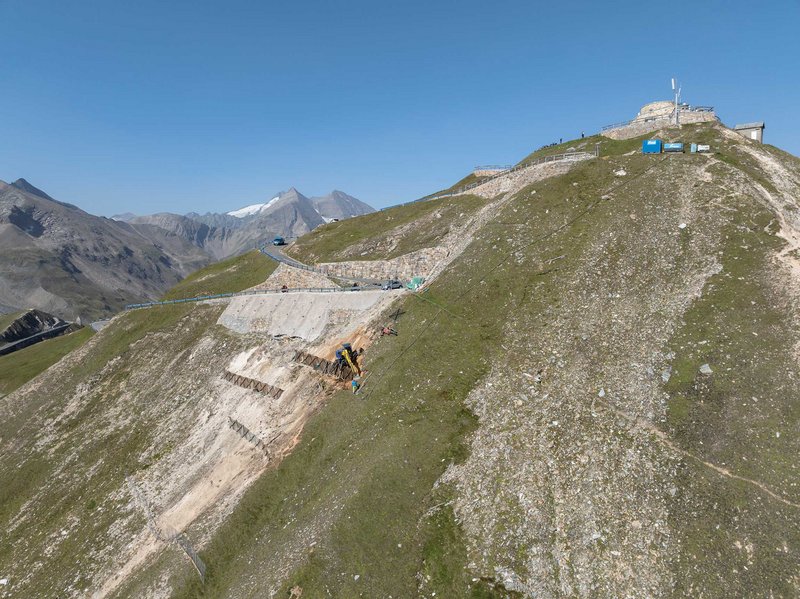
At 2,571 metres, the Edelweissspitze marks the highest point of the Grossglockner High Alpine Road and offers a unique panoramic view of 37 three-thousand-metre peaks. Due to erosion and persistent precipitation, the slope had already slipped by up to two metres in places over the years. In order to permanently guarantee the safety of the historic panoramic road, the team of Felbermayr Specialised Civil Engineering contributed its many years of expertise.
Challenge in the high mountains
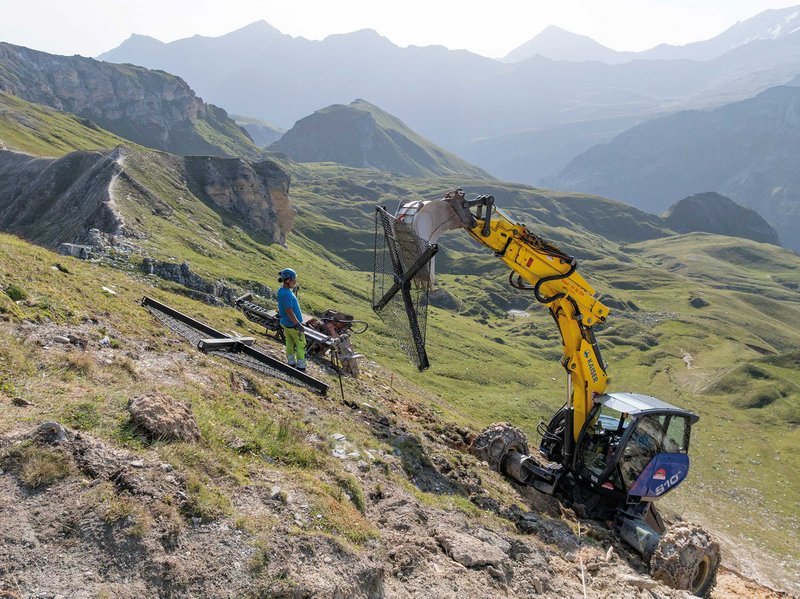
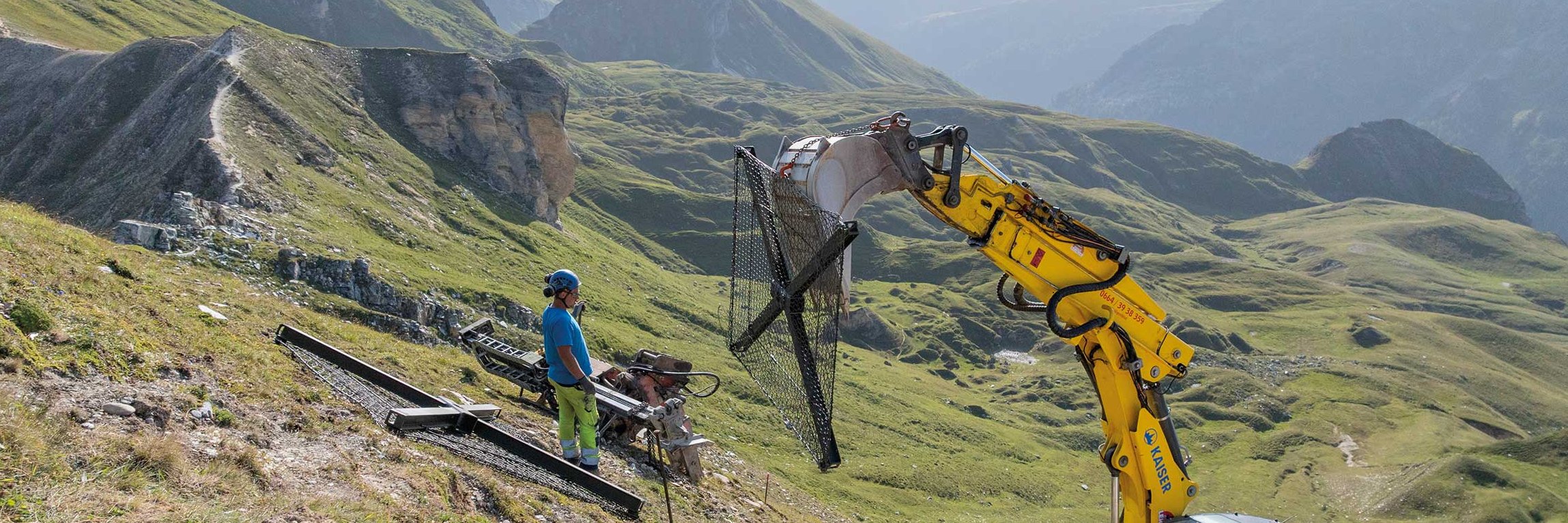
“We work here at over 2,500 metres above sea level in rocky terrain at a gradient of almost 40 degrees - every move must be right and every step must be well thought out,” says construction manager Johann Bugelnig, describing the demanding working conditions. The elements for securing the slope were positioned in the terrain with the help of a walking excavator, partly on unpaved scree ground. “In addition to the physically demanding work in the high alpine terrain, logistics was a central issue. The transport of materials to the construction site and the lifting of the umbrella elements on the slope had to be precisely coordinated and implemented under increased safety precautions,” adds construction manager Florian Haller.
Technical implementation of slope stabilisation
The assembled umbrella elements consist of a flexible steel construction with a base area of 2.00 by 2.50 metres. Two intersecting steel beams are connected via a central plate to which the central rod is mounted. Steel cables additionally tension the structure so that the forces that occur are dissipated via the built-in anchors into the load-bearing subsoil. A total of 850 linear metres of injection anchors were installed. These selfdrilling hollow rod anchors are filled with injection mortar via a pipe system and ensure optimal power transmission.
In addition to the umbrella elements, the specialists built a shotcrete beam positioned beneath an existing rock protection system. “The reinforced shotcrete wall, in conjunction with the slope protection elements, significantly increases the overall stability of the slope,” explains Haller. In addition to sustainable stability, the system offers two main advantages: relatively uncomplicated assembly and low demands on the backfill material. These are both crucial aspects in difficult-to-access terrain.
Due to the compact design, the umbrella elements can be precisely positioned on site and assembled in a short time. “Despite the extreme conditions, the slope protection was completed on time. Such projects show that with experience, team spirit and technical know-how, we can create unique and individual solutions where others reach their limits,” Bugelnig sums up. With the completion of the work, the Edelweissspitze remains a topographical and safe highlight of the Grossglockner High Alpine Road - and an example of how Felbermayr's specialised civil engineering brings precision and performance to the highest altitudes.